The mudroom and the utility room.
Wet coats, wet dogs and wet laundry. The hardest-working joinery in the house and the least forgiving of a short measurement.
Two rooms, or one room doing two jobs
A mudroom takes mud in from outside. A utility takes washing through and puts it away. They are different jobs and if there is space for two rooms they should be two rooms, because a wet spaniel and a folded shirt do not belong on the same bench.
Where there is only one room, put the mudroom function nearest the door and the laundry function furthest from it, with the bench and the hooks in between. The floor near the door should be stone or tile with a fall to a drain if you can get one.
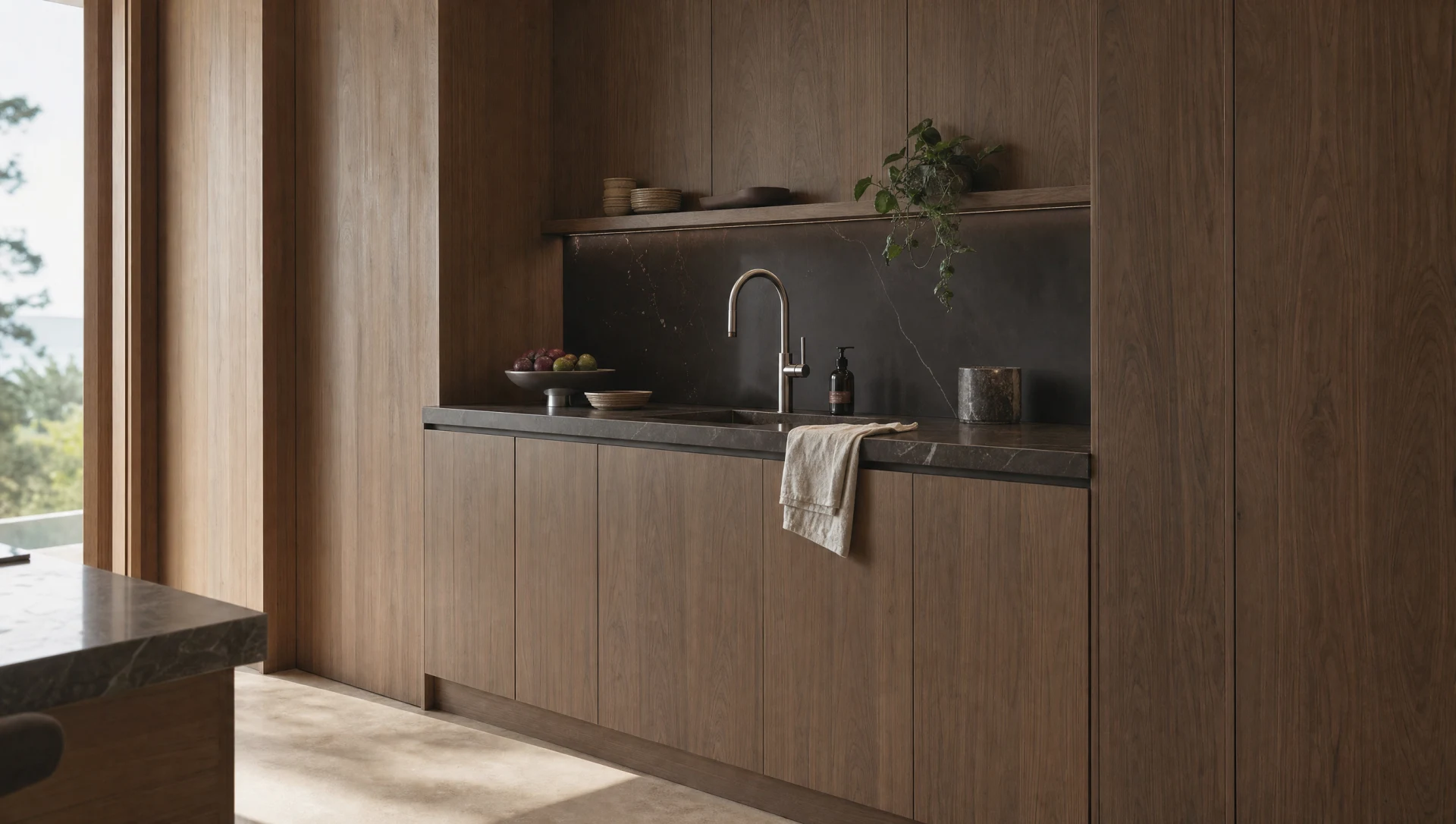
Machines are noisy. A utility under a bedroom will be heard. If the plan allows, put it under a hall or a stair.
Laundry
A washer and a dryer side by side need 52 inches of run at a minimum and sit better in six feet, which leaves somewhere to put the basket down. Stacked, they take a two-foot square footprint and stand about six feet high, which frees three feet of countertop.
A front-loader is 33 and a half inches high. Allow 34 and a half clear under a countertop, because a machine that has to be forced under one will be forced out again when it fails. Countertop over machines goes at 36 inches, or 36 and a half if you want the margin.
A deep sink earns its place: a 12-inch bowl takes a bucket under the faucet. Sorting drawers on full-extension runners, one per person or one per color, save more time than any appliance.
Drying
A drying cupboard is the single most useful thing in a utility room and the most often left out. Two feet square by seven feet high is the minimum that is worth building. Three feet wide by twenty-six inches deep is comfortable and will hold a family wash.
Slatted shelves or rails, a low-temperature radiant panel or towel warmer at the bottom, a vent at the top, and a gap under the door so air can move through. Without the vent it is a damp cupboard.
A ceiling drying rack over the machines works and costs almost nothing. Where a room has a persistent damp problem the honest answer is often a dehumidifier and better ventilation rather than more joinery.
Coats, boots and benches
A coat on a hook needs 16 inches of clear depth and 18 if it is a waxed jacket with a hood. Adult rails and hooks go at 60 to 64 inches, children at 40 to 48, and hooks at six to eight inches on center. Closer than six and the coats fight.
A bench at 18 inches high and 18 deep is the right height to pull a boot on. Under it, leave 12 to 14 inches clear for boots, with a removable tray in slate, zinc or a sealed iroko lip so it can be lifted out and hosed.
Mudroom minimum is five feet by six and a half. At six and a half by eight two people can get changed at once, which is the actual test.
The dog shower
Thirty-six inches square is the minimum pan and it suits a spaniel. Forty by forty-eight takes a Labrador and someone kneeling beside it. Raising the pan a foot makes the job easier on your back and asks the dog to step up, which most will.
A thermostatic mixer with a hand shower on a hose, a two-inch drain with a hair trap, and a tiled or stone lining. Joinery is kept six inches clear of the wet zone and lifted on adjustable feet with a removable plinth, so that anything that gets behind it can be found and dried.
Put the drying cupboard next to it and the towels in the drying cupboard.
How it is built
This is not a room to save money on. In-frame construction, dovetailed drawer boxes, solid backs, birch plywood carcasses, full-extension runners rated for a full drawer of wet coats. Doors take more knocks here than anywhere else in the house.
The Suffolk in a hard-wearing eggshell handles it, finished in our own booth and repairable in place. The Scandi suits a mudroom that gets genuinely hard use, oiled and easy to make good. Countertops in iroko, oak or a sintered surface. Hardware in unlacquered brass or black-oxidized steel, both of which improve with wet hands rather than corroding under them.
All the rooms → Scullery, pantry, mudroom → The seven ranges →
Tell us about the room.
Where the house is, roughly when you would like to be cooking in it, and what you have in mind. We will tell you honestly whether we are the right people for it.
Make an inquiry