Visit the workshop.
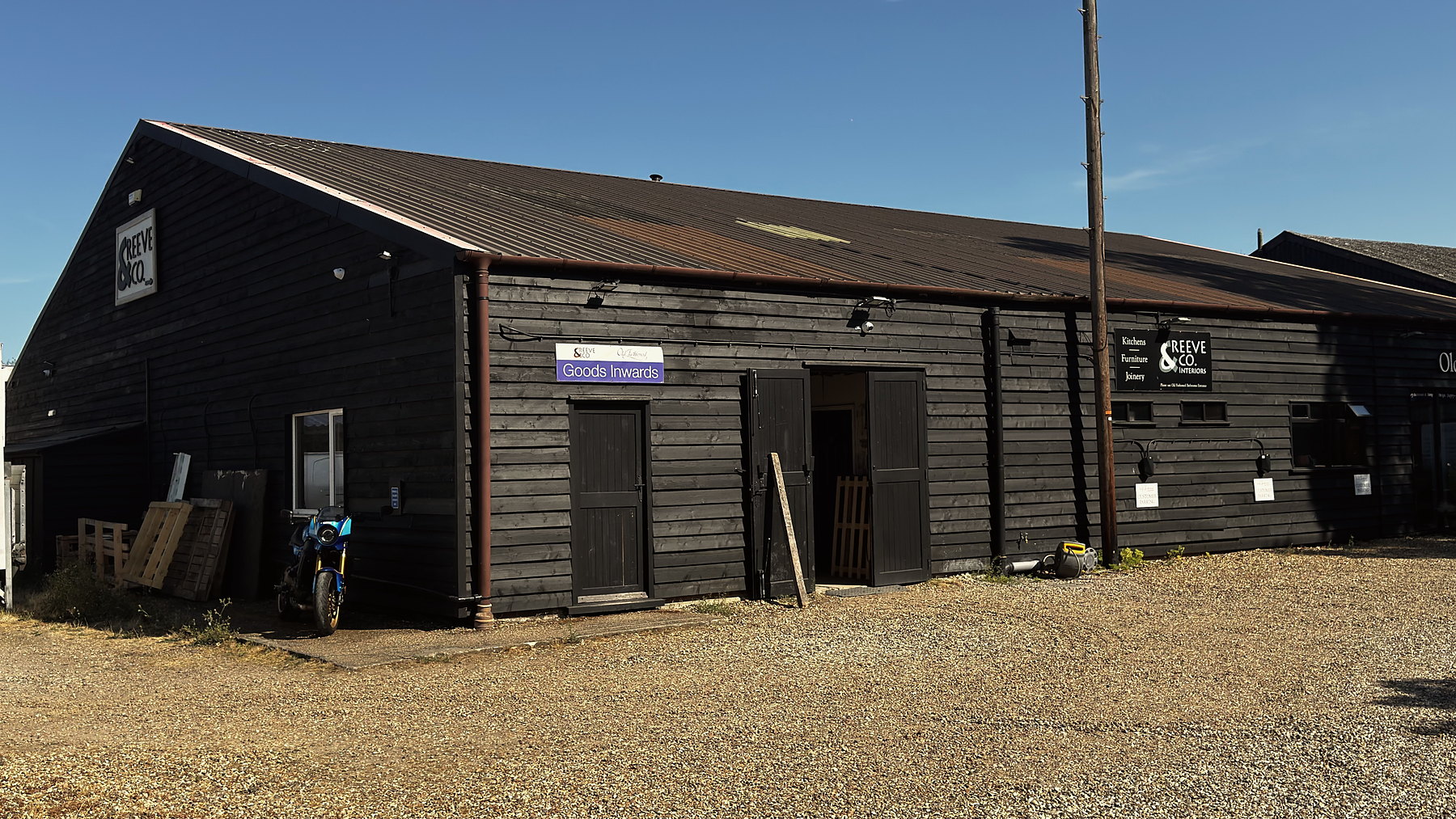
There is no showroom. There is a workshop with nine people in it and whatever we happen to be making that week.
Why we ask you to come here
A showroom shows you a kitchen that was built to be looked at. A workshop shows you how yours will be built, which is a different and more useful thing.
You will see a job at every stage on the same morning: boards being cut, face frames being clamped, a door being fitted to its frame with a plane, a carcass on the bench with its drawer boxes going in, and something in the finishing room between coats. Nothing is set up for the visit. If a door is out by a thirty-second of an inch when you arrive, you will see it being corrected.
You will also meet the people. Paul Sims runs the machining. Kevin Austin is on the lathe and the molder. Gary Blake, Steve Bell and Jason Price are on the benches. Our polisher is in the finishing room. Oliver Manning draws. Whoever ends up on your job will be in the building.
What you will see
The rod board. Every commission is set out full size on plywood before machining, and there is usually one on the wall. It is the clearest explanation of in-frame construction anyone can give you, because you are looking at the actual thickness of the frame and the actual gap around the door.
The spindle molder and the block store. Our historic moldings are cut on steel we have had ground to profiles taken from real houses. If your house has a run of Georgian ovolo casing, this is the machine that will match it.
The timber store, where boards are stickered and conditioning. Poplar, oak, maple, walnut and whatever the current jobs need, sitting at workshop humidity until they stop moving.
The finishing room, held at around 68 degrees. Hand-painted doors on trestles, sprayed panels on the rack, and the sample boards, which are the only honest way to choose a color.
Samples, drawers and hinges you can open, shut, load and slam. We would rather you did that here than discovered something at home.
How long it takes
Ninety minutes to two hours. Half of that is the shop floor, half is sitting down with a drawing board, a pot of coffee and your plan.
We do not price on the day and we do not ask you to decide anything. There is no follow-up call the next morning. If you want to go further, the next step is the design stage, and you can ask for it whenever you like.
Most people come once before commissioning and once during, usually when the carcasses are up and the doors are hanging. The second visit is the one clients tend to remember.
What to bring
Plans if you have them, printed rather than on a phone.
Photographs of the room, and of the rooms either side of it. Kitchens are judged from the doorway of the next room.
Rough dimensions, including ceiling height, window head heights and the position of the furnace, the panel and the drains.
Your appliance list, or the two or three you are deciding between.
Anything you have torn out and kept, including things you dislike. Knowing what someone cannot stand is often faster than knowing what they admire.
Whoever else will use the room. Two people arguing gently about the position of a sink in front of us is a productive hour.
Getting here from America
Most clients fly into London and come up by train from Liverpool Street. Stowmarket is about an hour and a quarter, and we will collect you from the station if you send us the train time. Tell us when you are coming and we will make sure the work on the benches that week is worth the journey.
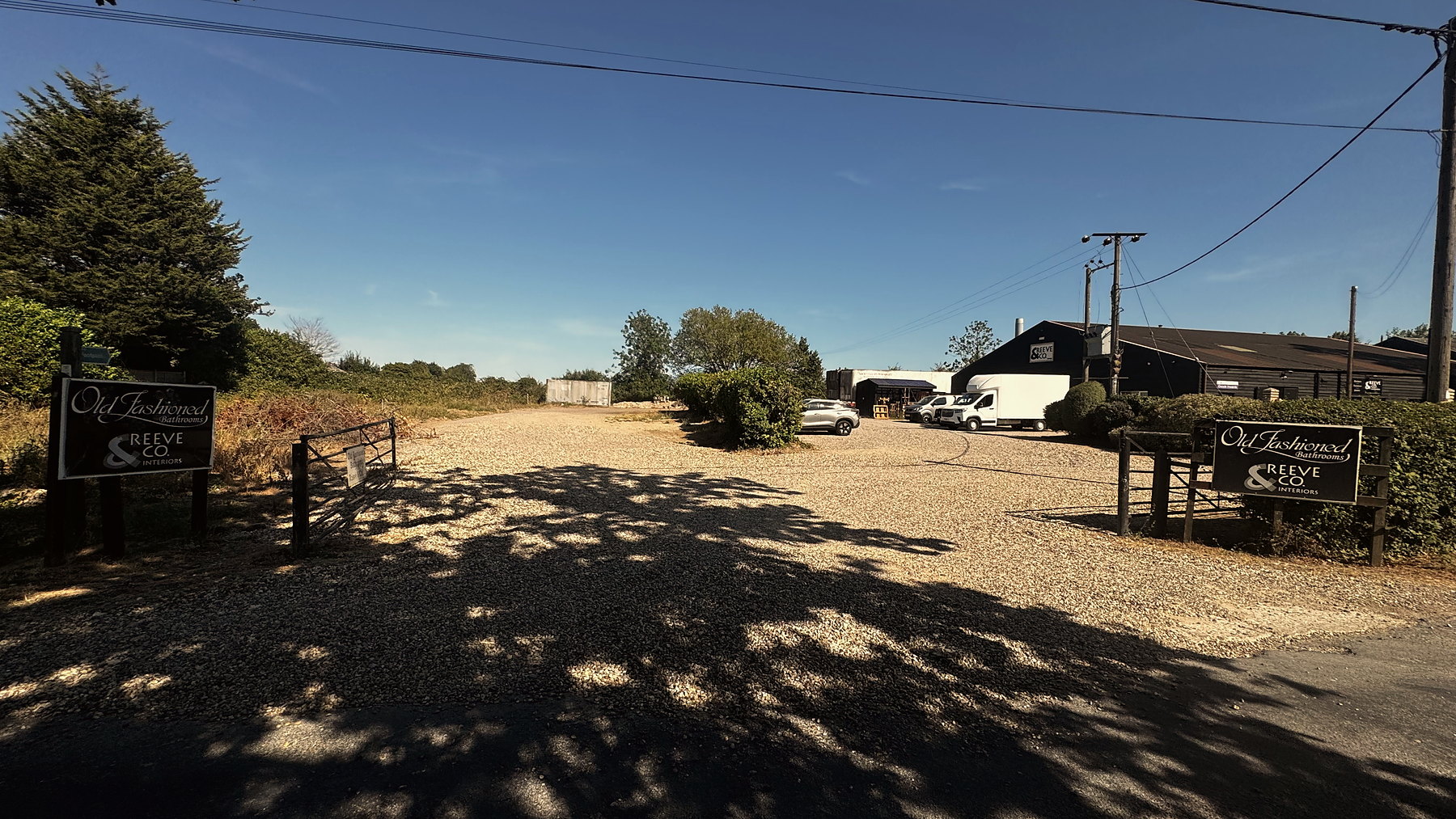
Stonham Road, Mickfield, Stowmarket, Suffolk IP14 5LS. Six miles north of Stowmarket, just off the A140. Twelve miles from Ipswich; around thirty from Bury St Edmunds, Cambridge and Colchester.
Coming by car from the A140, turn east onto Debenham Road at Mickfield and follow it for about a mile — the road bends twice before the village. As you come in you will pass a postbox and an old telephone box, first on your right. Turn right there into Stonham Road. The chapel is on your left, and we are a few hundred yards further on.
Park in the yard. Flat shoes, please: there are cables, boards and sawdust. It is a well-heated workshop in winter but the doors are open in summer, so dress for a barn rather than an office. We provide ear defenders and glasses if a machine is running while you are through.
Tell us about the room.
Where the house is, roughly when you would like to be cooking in it, and what you have in mind. We will tell you honestly whether we are the right people for it.
Make an inquiry