Seven English kitchens, one workshop, one set of hands.
The differences are in the door and the ornament. Behind the door they are built the same way, to the same standard, by the same nine people.
Every range is made to the room rather than to a catalog, so a range is a starting point and a language rather than a product code. The range decides the door and the ornament. Everything behind it — the carcass, the frame, the drawer boxes, the finish — is built the same way whichever one you choose.
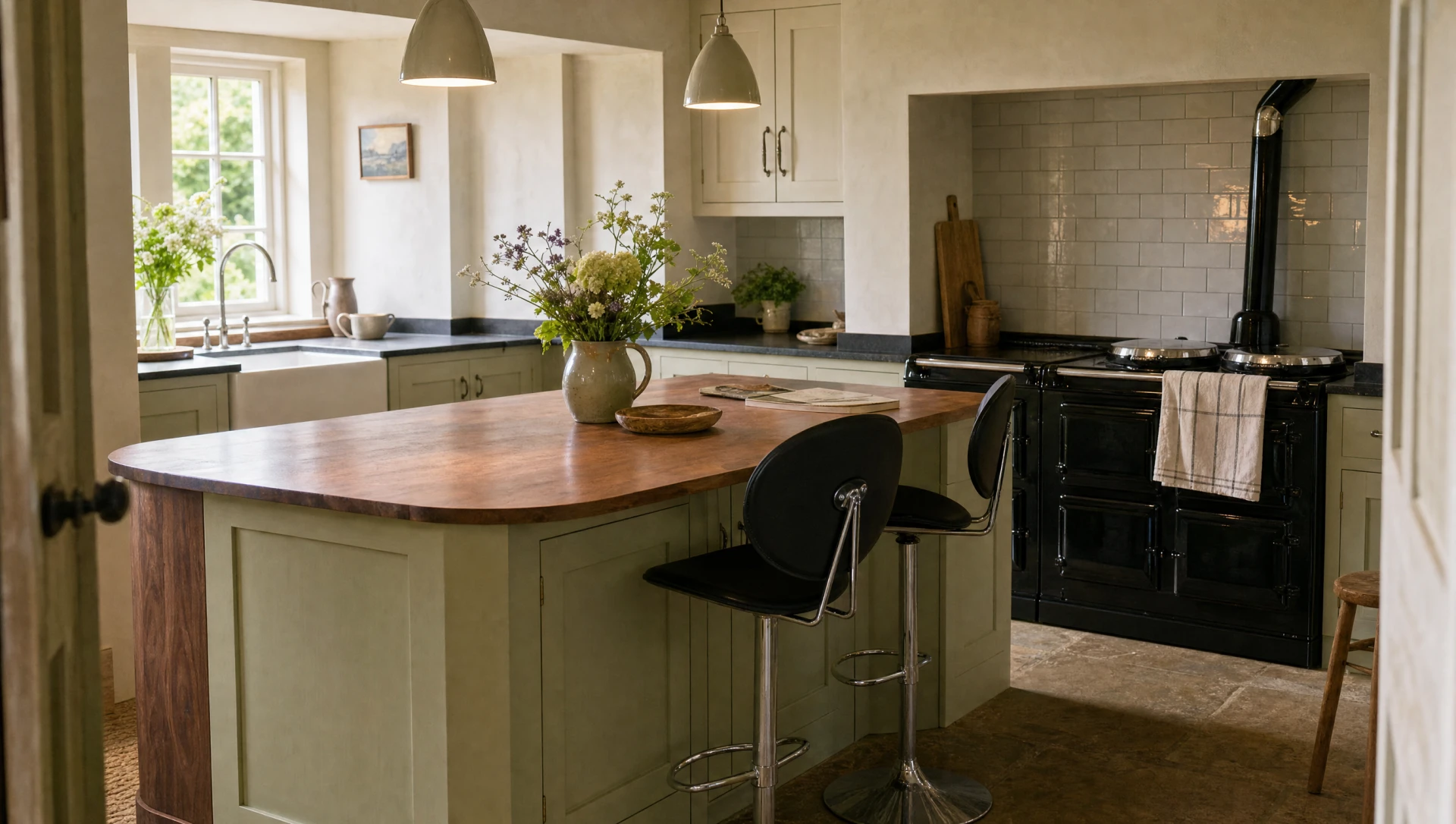 Hand-painted in-frame (inset, in American terms)The SuffolkA flat center panel, a plain stile and rail, a solid timber face frame, and paint. No molding on the door, no carving, no glazing bars, no applied ornament anywhere in the range.See the range →
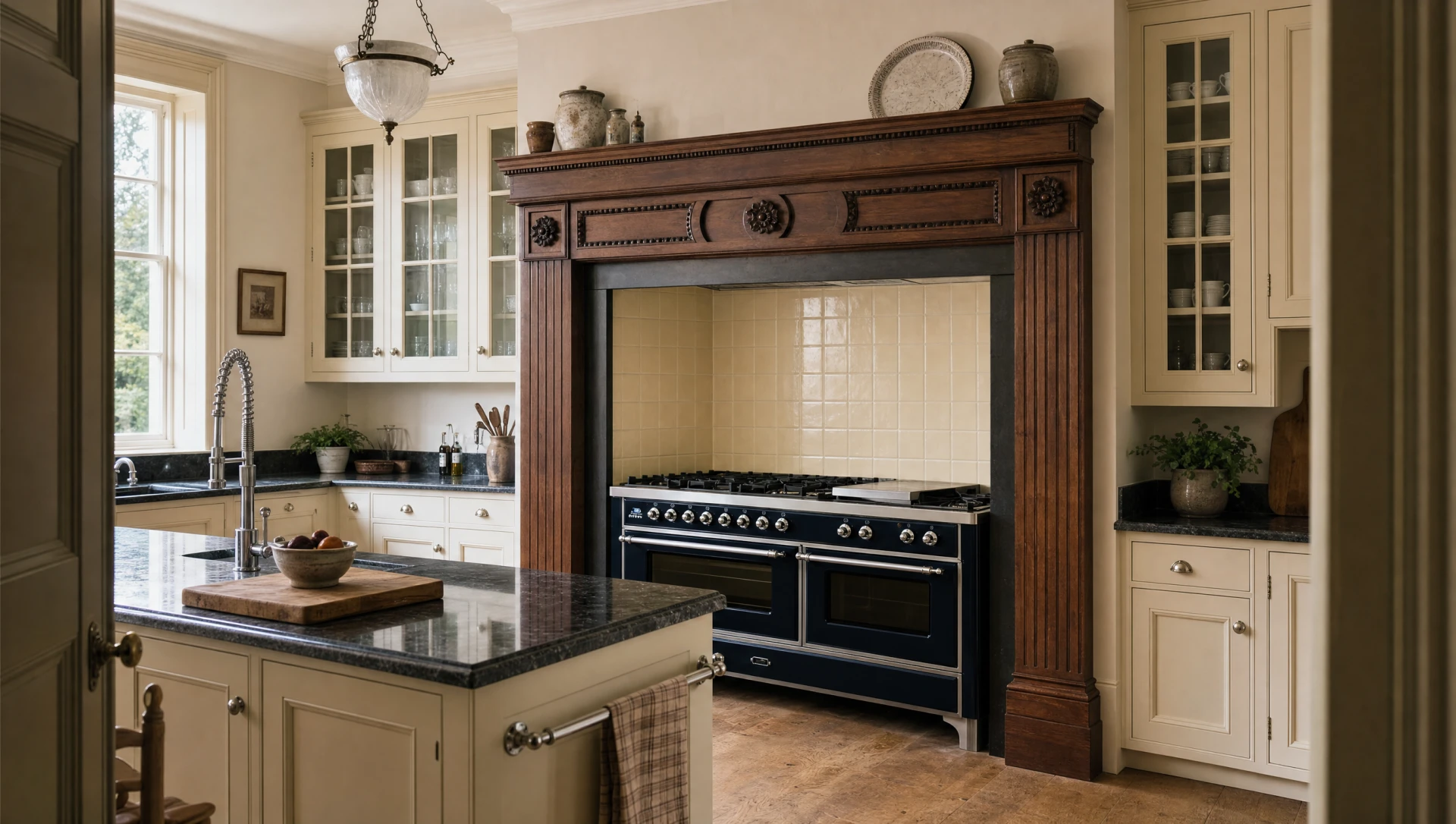 Molded in-frameThe EssexThe most decorated of the seven. A molded door — ovolo, ogee, bolection, or a profile drawn for the room — with glazed upper cabinets, hand-cut carving, corbels and mantels where the room asks for them.See the range →
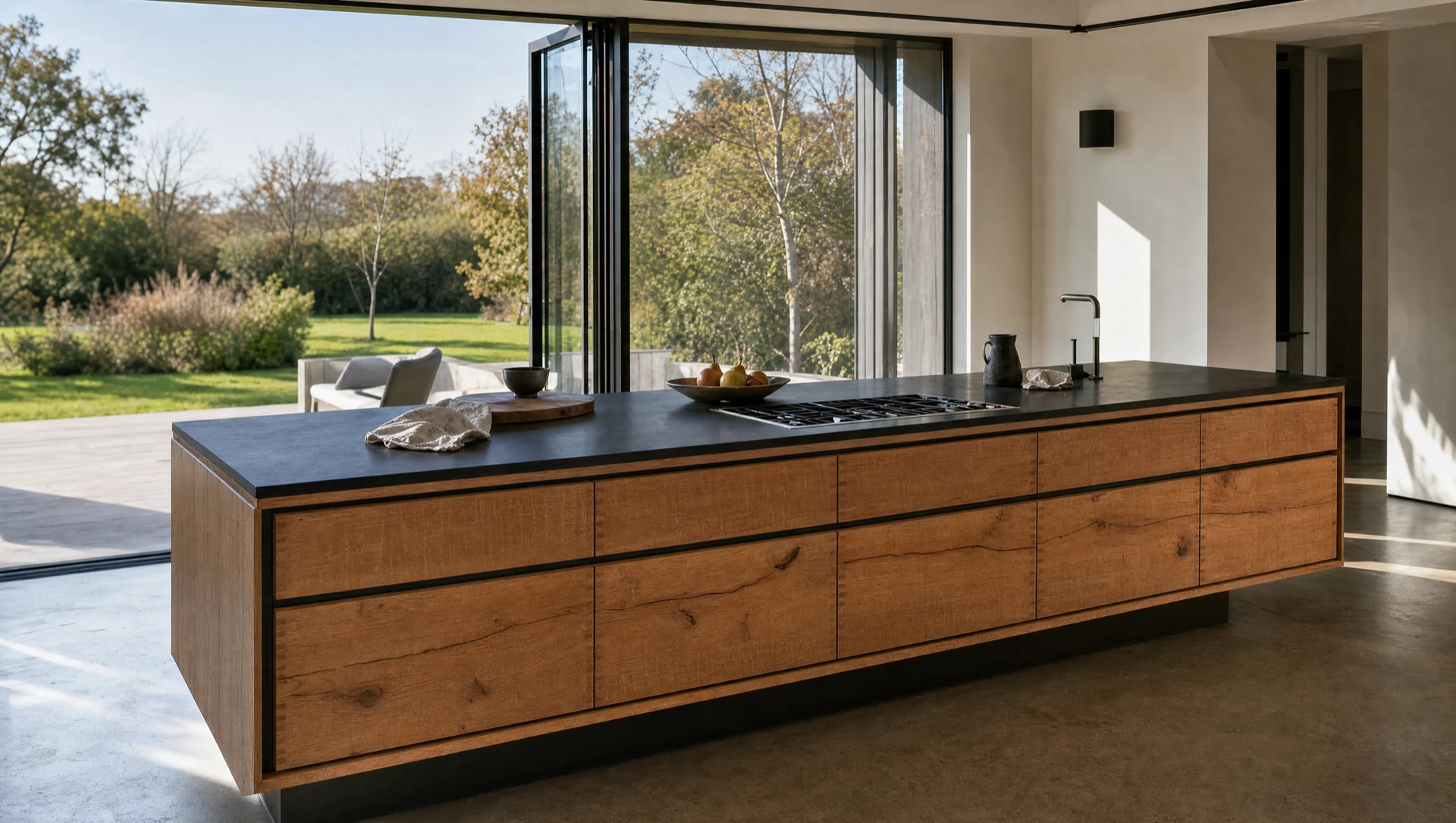
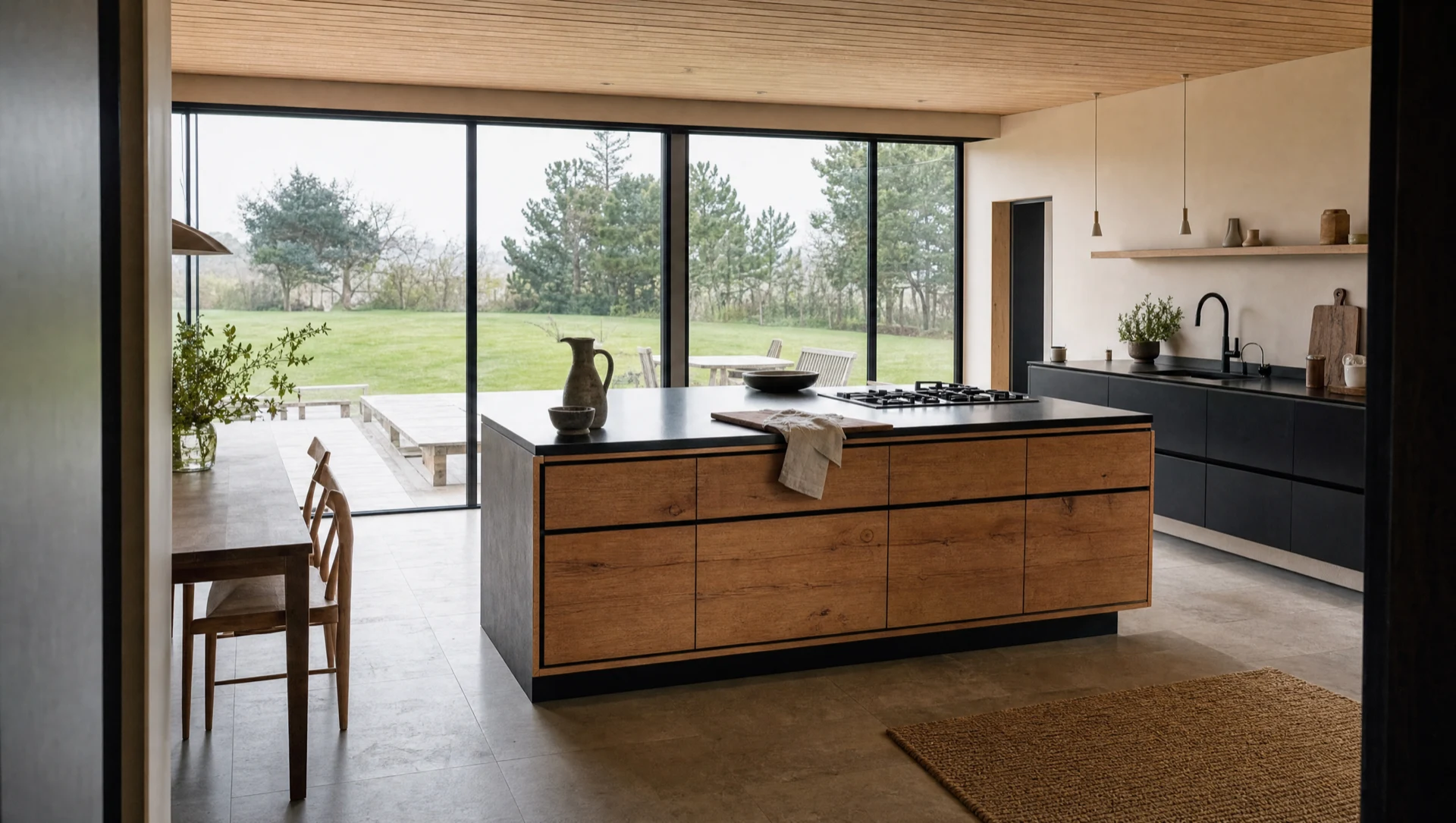 Handleless oak, solid timberThe ScandiFlat, finger-jointed fronts in character oak. No paint, no applied handle, no frame around the door.See the range →
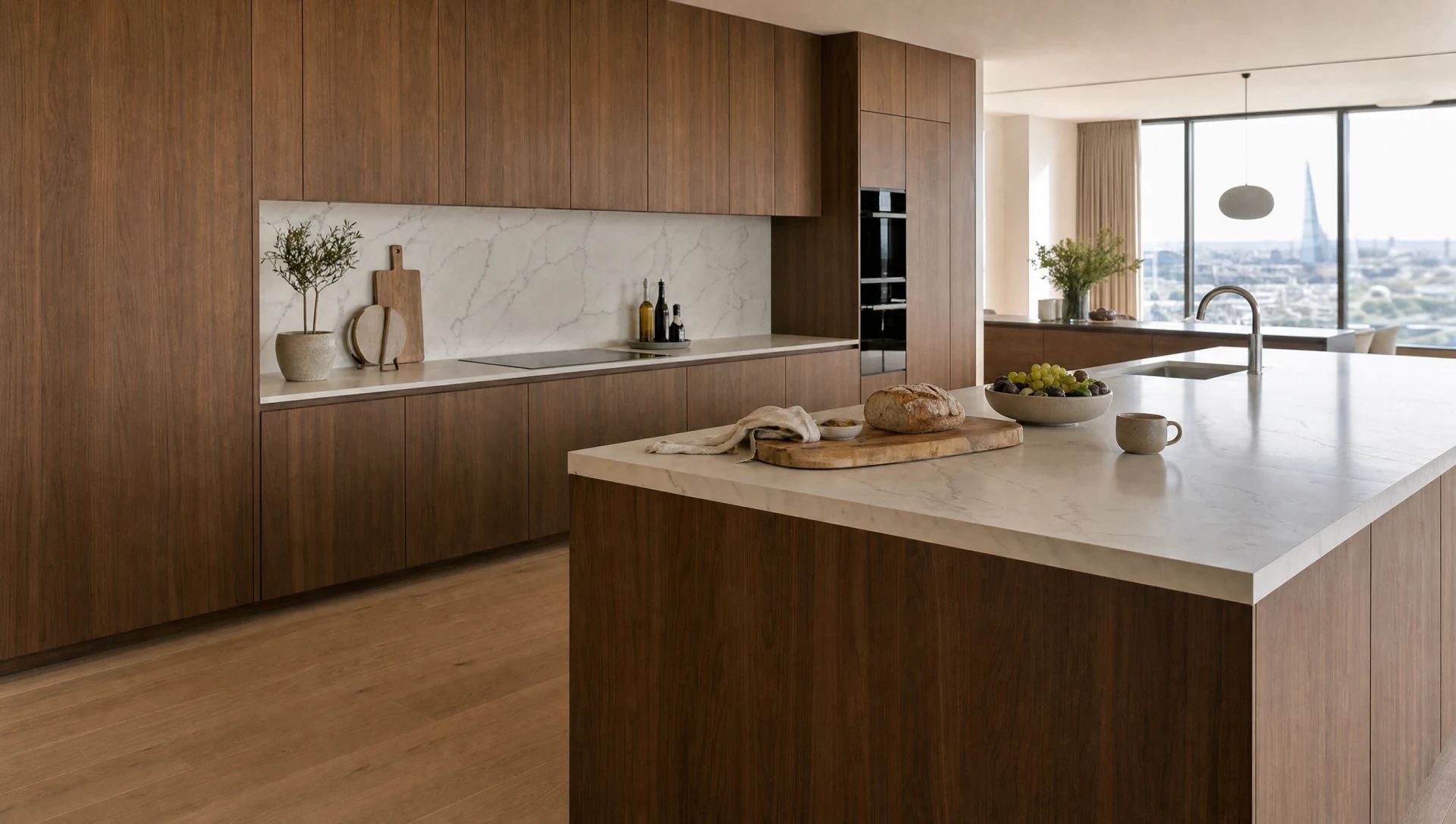
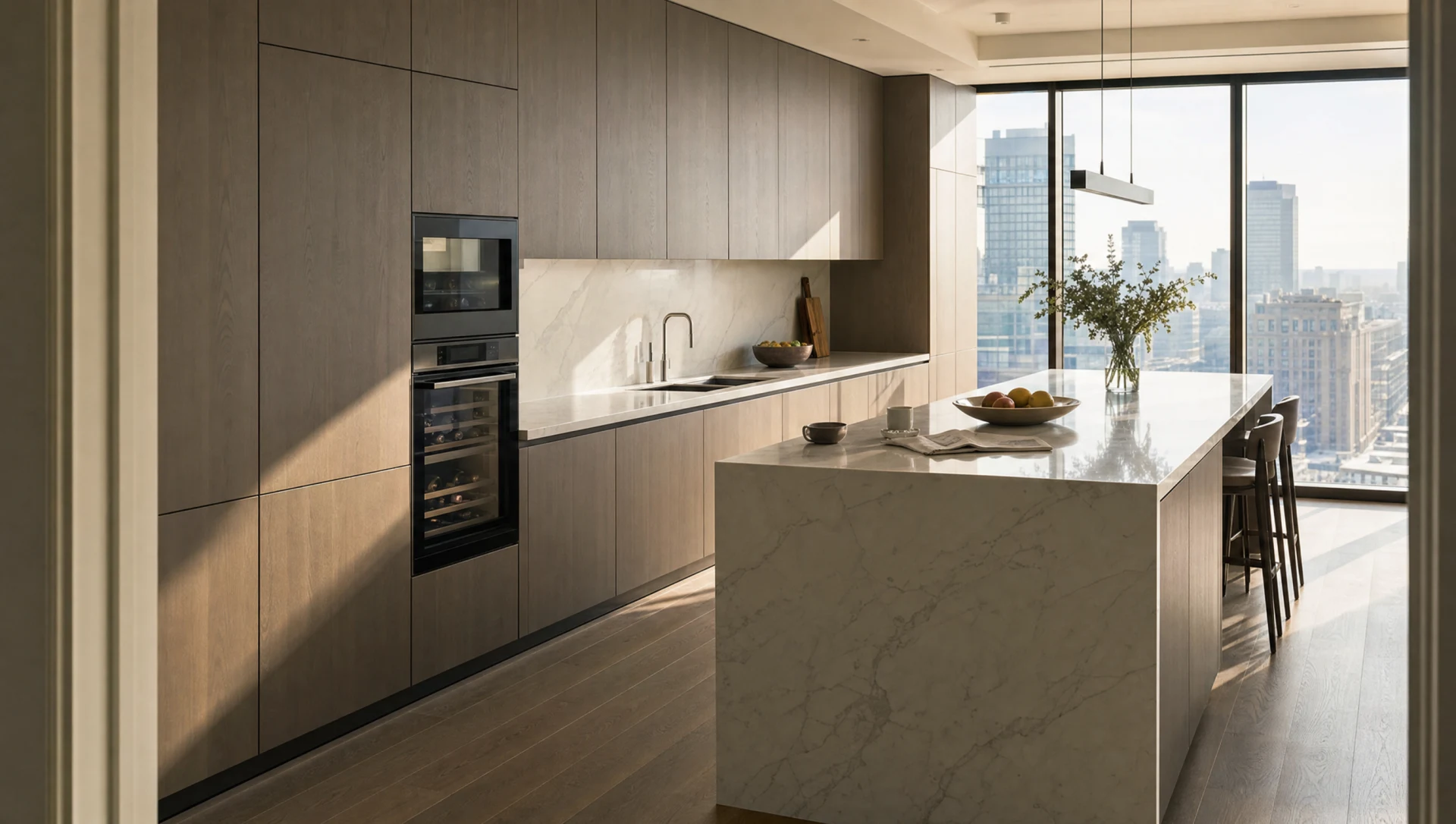 Sprayed, handleless, contemporaryThe KensingtonFlush handleless fronts, book-matched and sequenced grain from a single parcel of veneer, appliances behind matching panels, and runs that change material without changing plane. Sprayed in our own booth to a tolerance that shows if it is wrong..See the range →
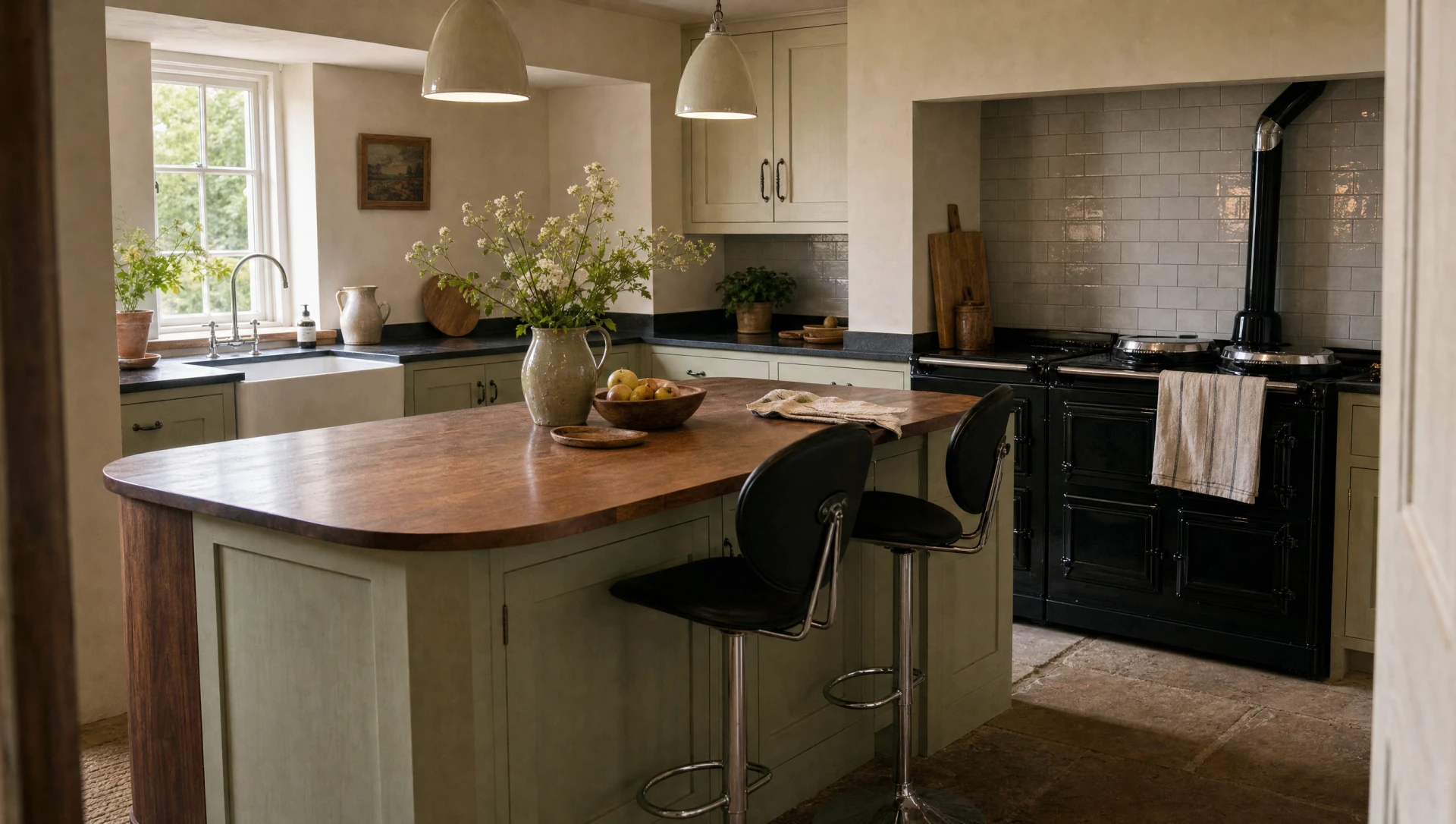
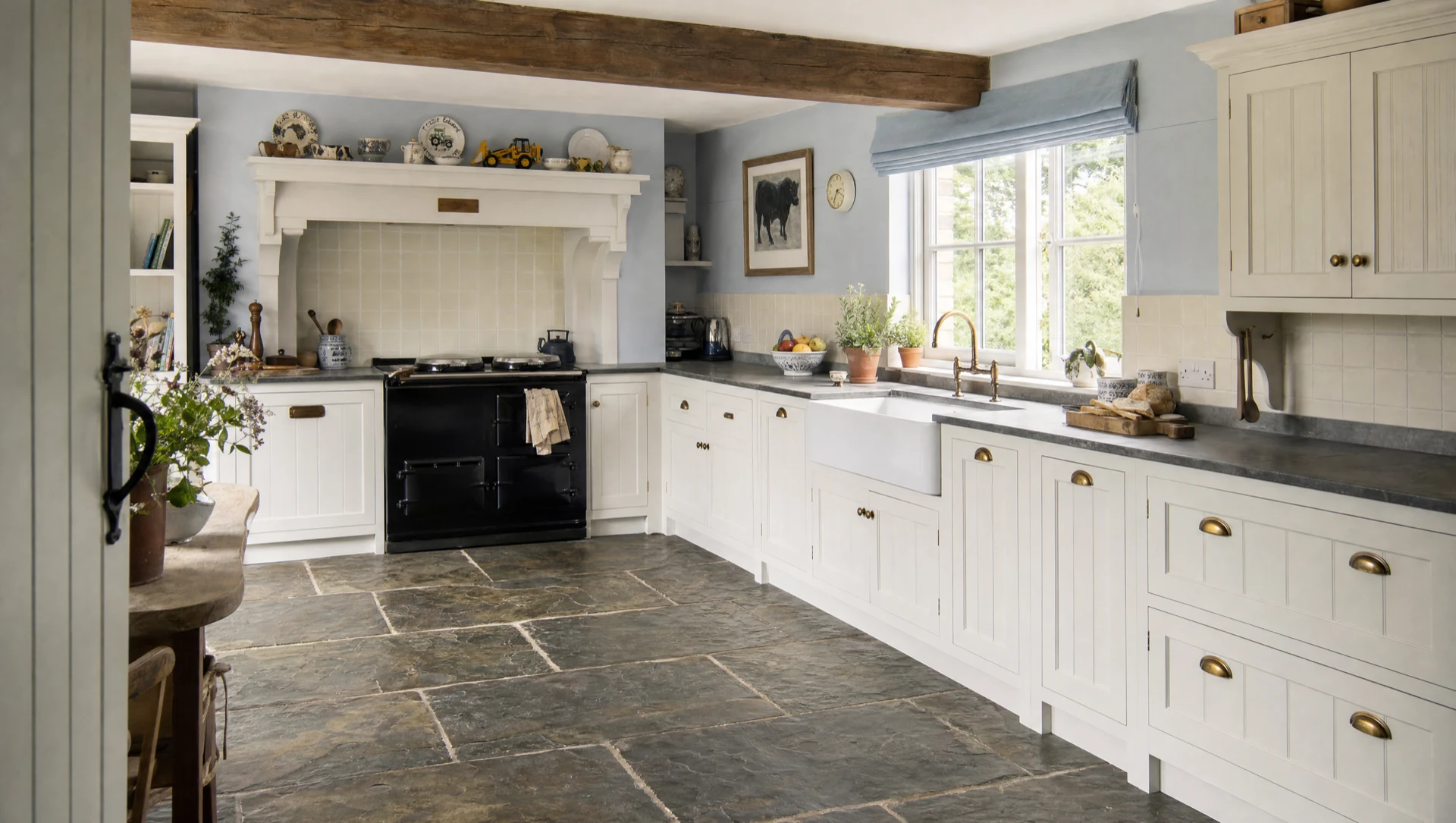 Painted in-frame, built around a rangeThe FarmhouseDesigned around two fixed points: the range and the sink. A mantel rather than a hood, a fireclay sink, plain recessed panels, cup handles and turned knobs, and joinery scribed to a floor that moves..See the range →
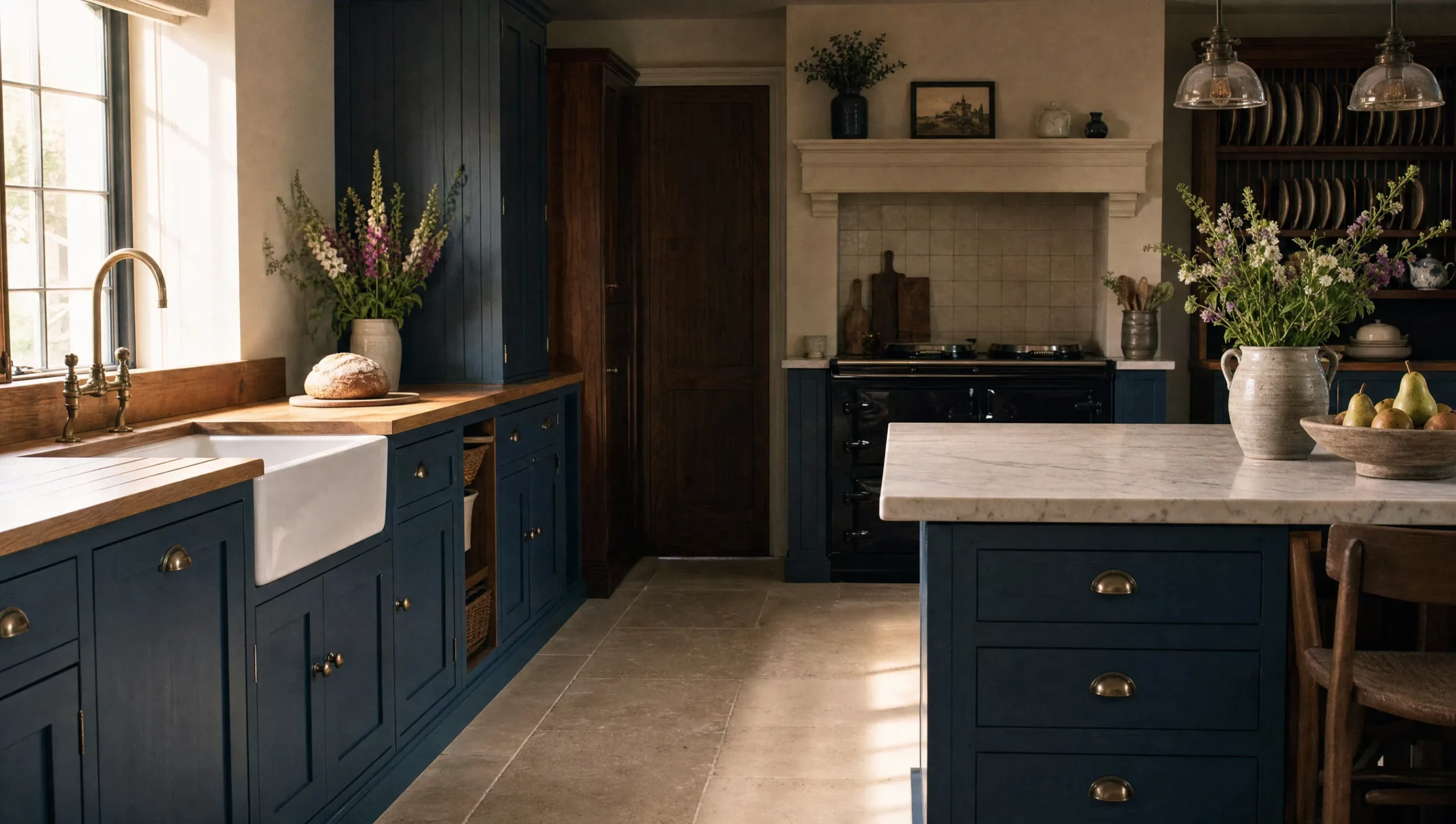
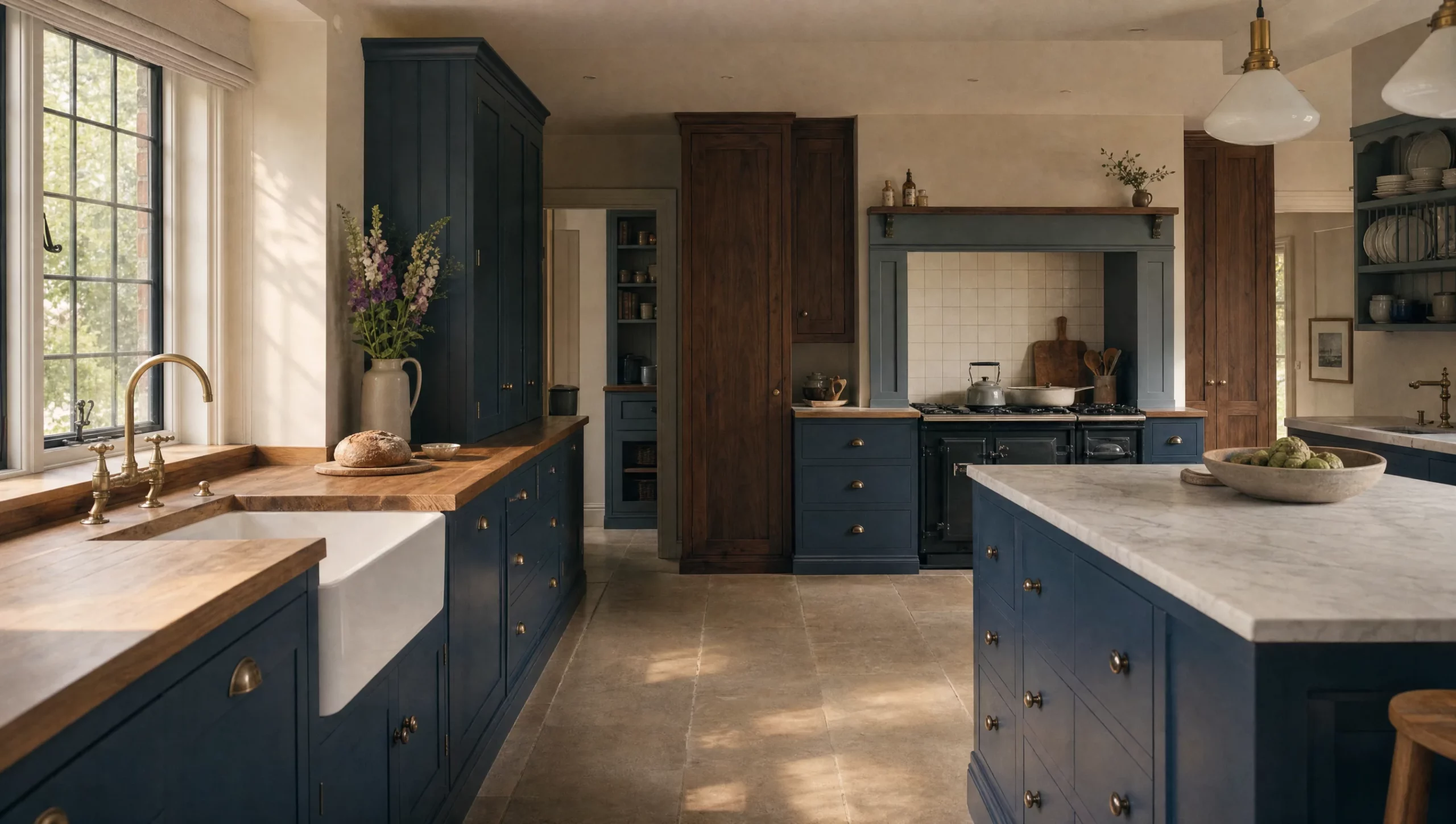 Painted in-frame in color, set against unpainted oakThe NorfolkPainted in-frame cabinetry in a strong color, with unpainted oak left alongside it to do its own work. Two countertop materials rather than one: oiled oak on the runs, stone on the island.See the range →
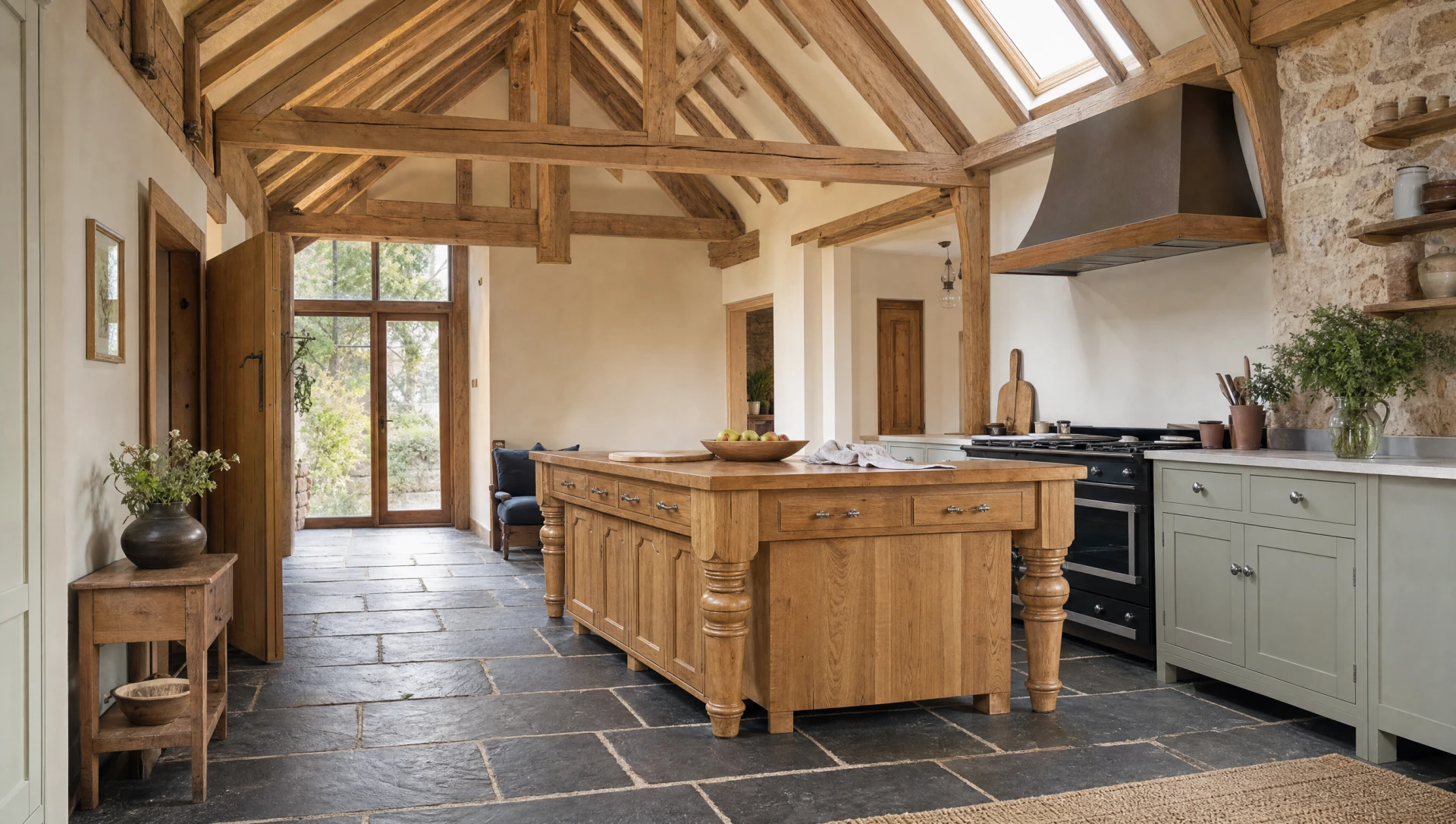 Furniture, not a fitted runFreestandingKitchen furniture made as separate pieces — an island on legs, a dresser, a larder cupboard, a sink stand, a prep table. Each one finished on all six sides, standing clear of the wall, and able to leave the room without a saw..See the range →
Two questions settle it, usually
The first is what the house is already doing. A room with a molded baseboard, a casing with a section to it and walls that are out of square is a room where in-frame work looks inevitable and anything else looks applied. A contemporary house with a lot of glass and no moldings is the opposite.
The second is whether you want the door to be the detail or the timber to be the detail. Painted in-frame makes the door the quiet part and the room the loud one. The Scandi does the reverse: the grain is the ornament and there is nothing else on it.
If you already know which you want, say so at the first call and we will tell you honestly whether we are the right people for it. If you do not, that is what the survey and the drawings are for.
In-frame, face-frame, frameless →
Shaker is not a style →
What a kitchen costs, and why →
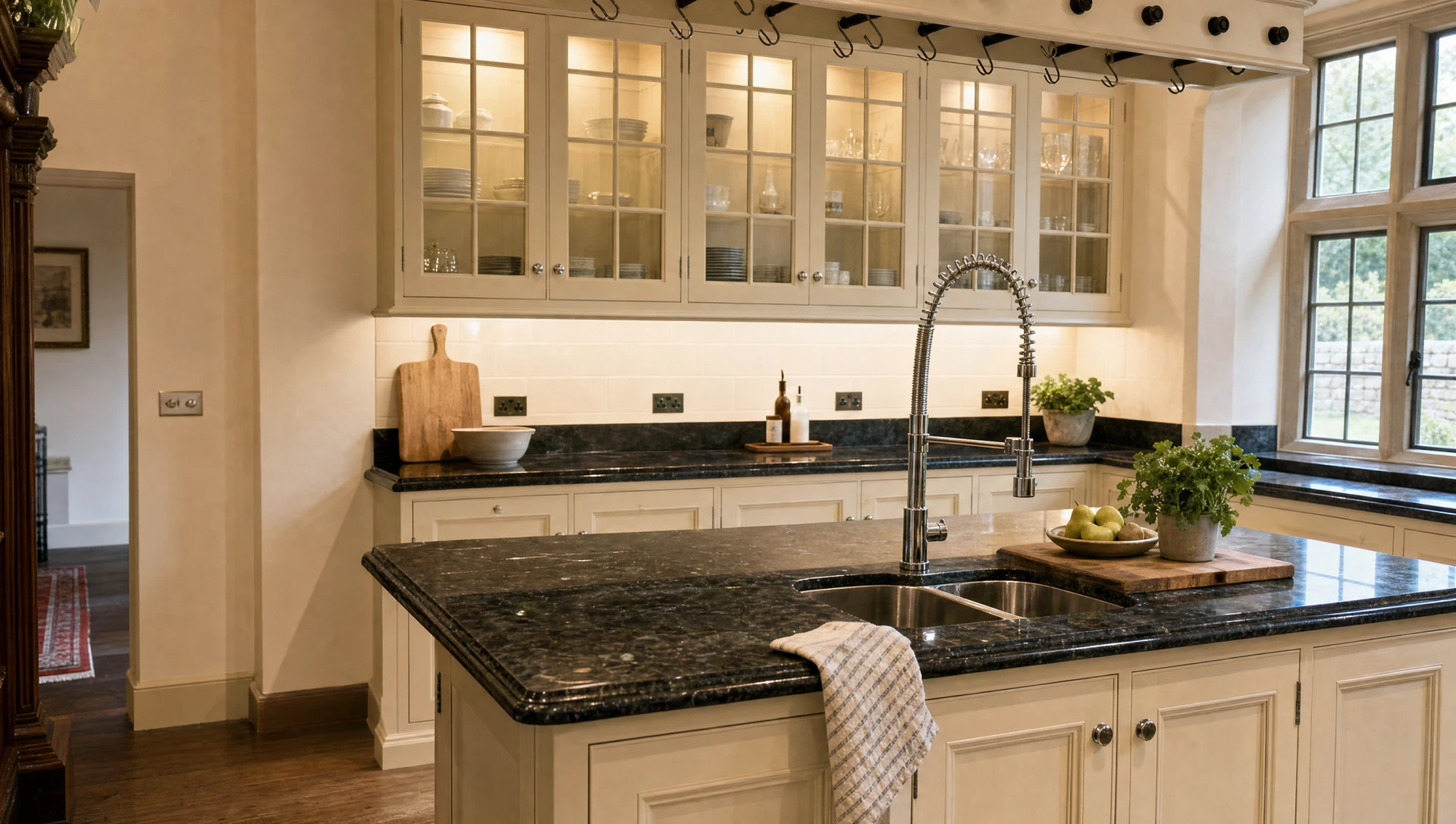
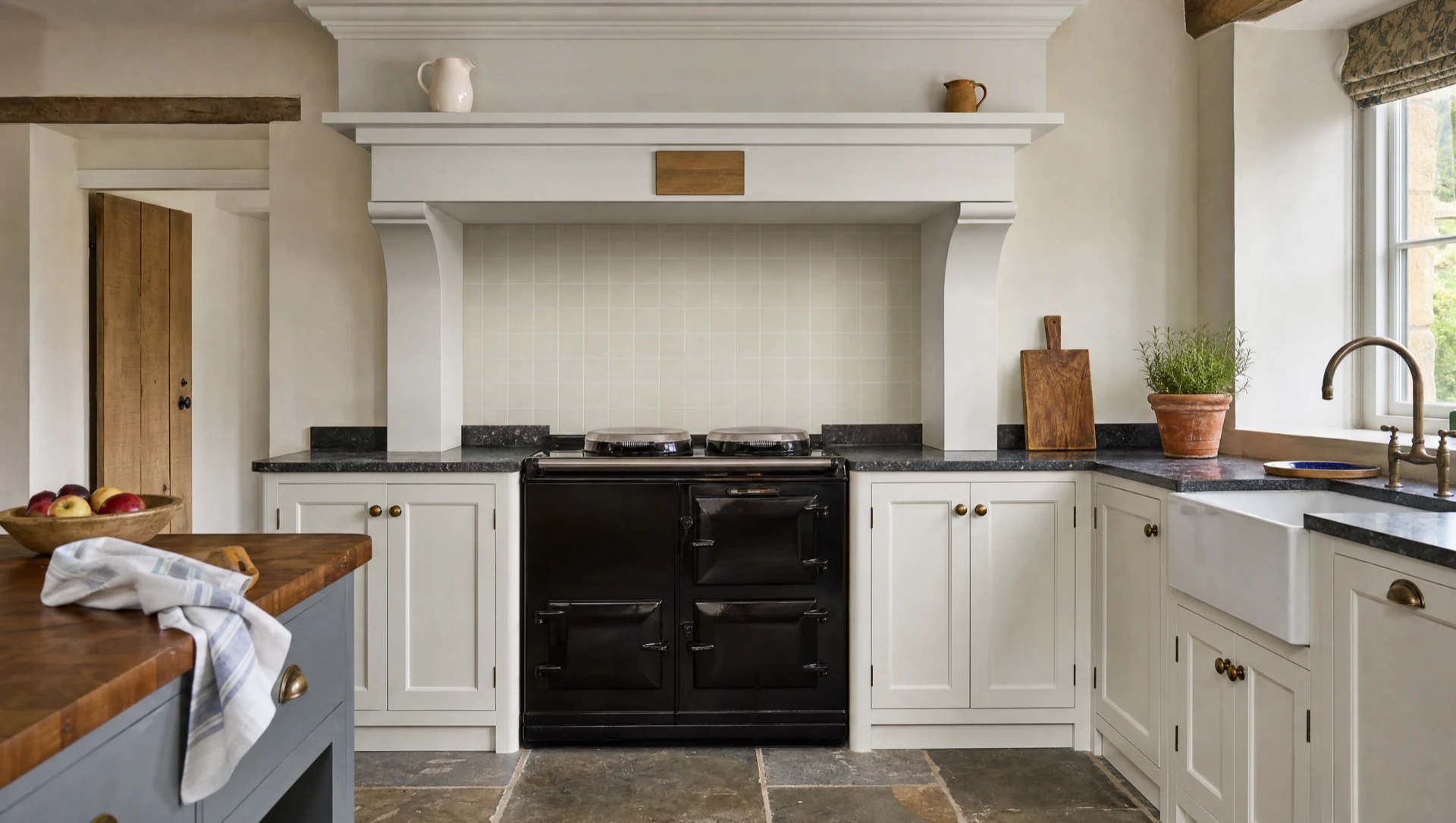
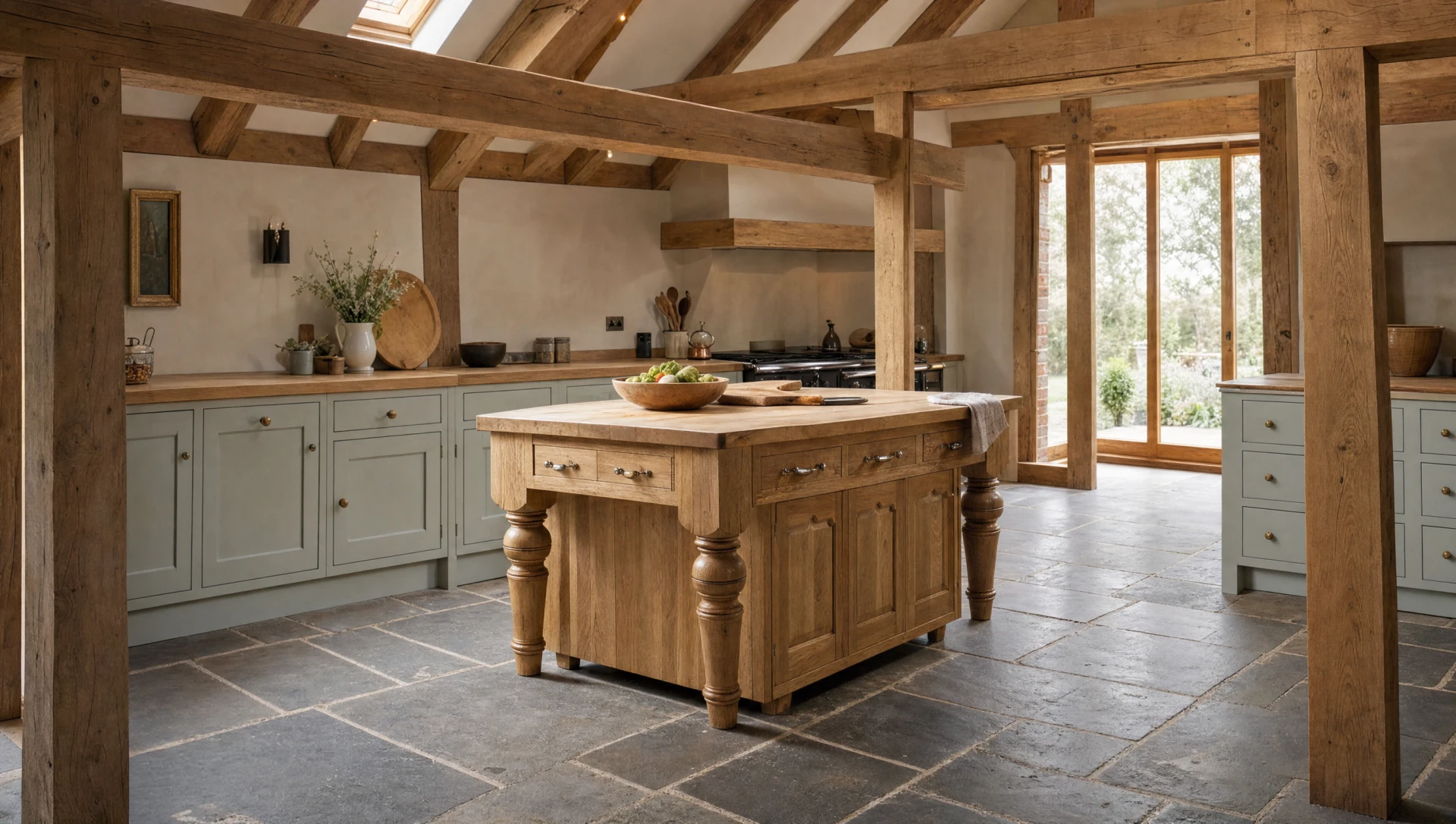
Every kitchen on this site is one we have made. The images are visualizations rather than photographs of our clients’ houses. They are built from our own workshop drawings and our own photographs of the work on site, and finished with AI, because our clients ask that their houses are not photographed or published. None of it is stock imagery and none of it is somebody else’s work. Drawings, samples and references for completed commissions we will show you in person — visits to the Mickfield workshop are by appointment.
Read next
Countertops for an English kitchen
Tell us about the room.
Where the house is, roughly when you would like to be cooking in it, and what you have in mind. We will tell you honestly whether we are the right people for it.
Make an inquiry