Scullery, butler’s pantry, mudroom: which one do you actually want?
Three rooms, three different jobs, and a set of names that mean slightly different things either side of the Atlantic. Worth settling before the layout is drawn.
Almost every serious kitchen we are asked for has a second room behind it. Which second room is the real question, and the vocabulary gets in the way, because the same word means slightly different things in Suffolk and in Connecticut.
The scullery
The working room. Sink, dishwasher, drainer, the bulk of the crockery, the things you do not want on show and the noise you do not want in the kitchen. In an English house of any age it is where the washing-up happened, and it is coming back for exactly the reason it existed in the first place: an open-plan kitchen is a lovely room to sit in and a terrible room to leave a stack of plates in.
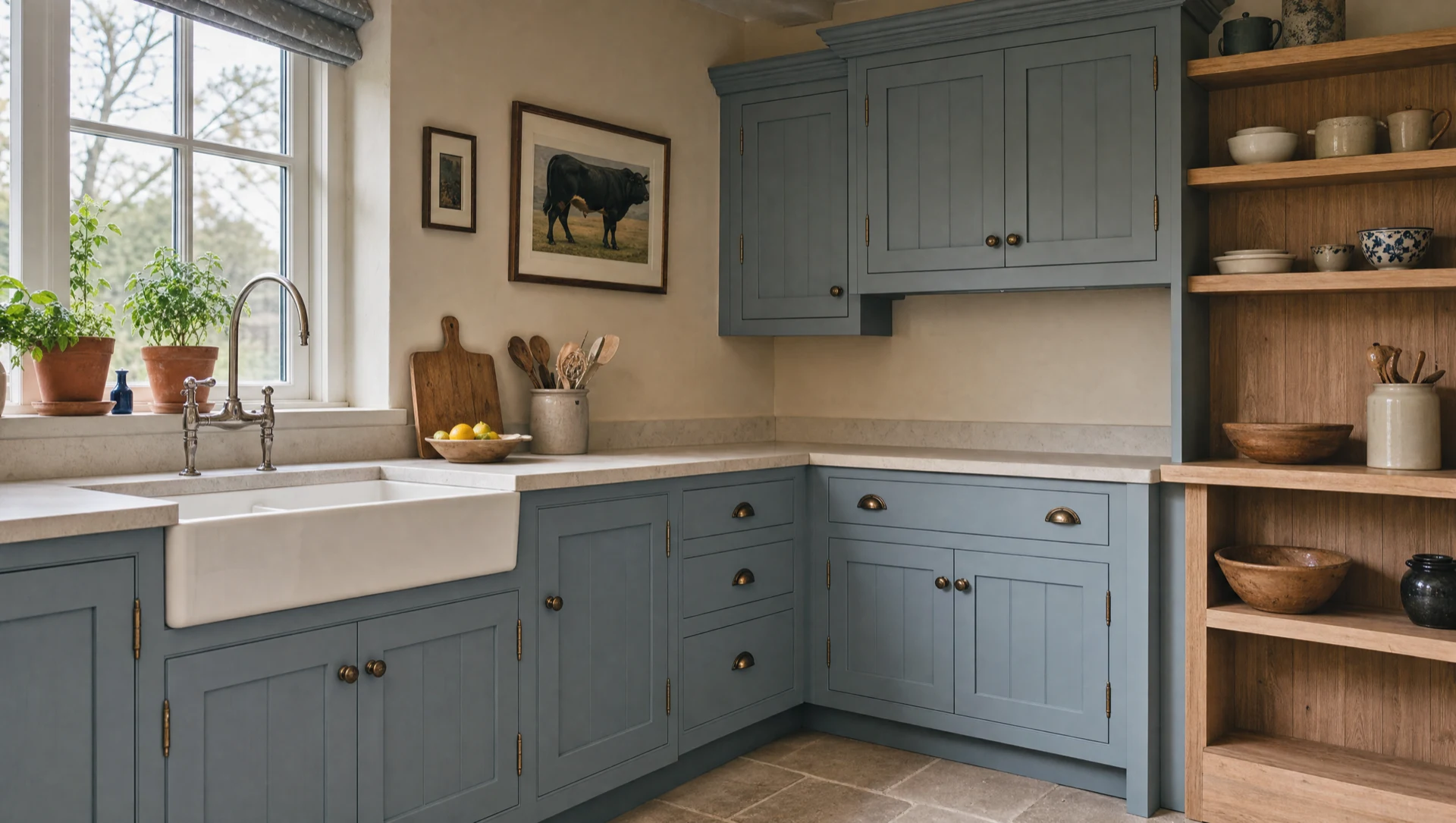
A scullery earns its space when the kitchen is open to somewhere you actually live. It is the room that lets a handleless, immaculate kitchen stay handleless and immaculate, which is why almost every one of our city clients ends up with one.
The butler’s pantry
In American usage this is usually the passage between the kitchen and the dining room, fitted out with glazed cupboards, a counter, sometimes a second sink and a wine cabinet. Its job is serving and storing the things that go to the table — glass, china, silver, drinks — rather than washing them.
In English usage the same room is often just called the pantry, and confusion follows. If what you want is a beautiful room you walk through carrying a decanter, that is a butler’s pantry. If what you want is a room to hide the mess in, that is a scullery, and it belongs next to the kitchen sink rather than on the way to the dining room.
The larder
Storage for food, and traditionally the coolest room in the house — north-facing, ventilated, with a stone or slate shelf that stays cold. A larder is not a pantry with a different name; it is a piece of building physics. A modern one rarely gets the north wall it deserves, but the principle still applies: keep it off the sunny side, ventilate it, and give it a cold shelf.
Where there is no room for a larder, a larder cupboard does most of the job: a full-height, deep, in-frame cupboard with a work surface inside it, racks in the doors and shelves you can actually reach the back of. It is the most useful single piece of joinery in a kitchen and the one people are most surprised by.
The mudroom
The American version of what an English house calls a boot room, and frankly the better name for it. Coats, boots, dogs, wet things, and the door everybody actually uses. Its requirements are unglamorous and specific: a floor that can be mopped, a bench at the right height to take boots off sitting down, hooks at two heights, ventilated cupboards for damp coats, and somewhere for the dog towels that is not the kitchen.
Slatted doors are the detail worth insisting on. Anything holding damp coats or laundry needs to breathe, and a slatted door lets it without a grille cut into a panel.
The utility room
Laundry, and increasingly the boiler, the vacuum and the ironing. In American houses this is often a separate laundry room; in English ones it is frequently combined with the boot room. That works if the laundry is behind doors, and does not work if the washer is in the same air as the wet coats.
How to decide
Ask what each room is protecting. A scullery protects the look of the kitchen. A butler’s pantry protects the dinner. A larder protects the food. A mudroom protects the floor. A utility room protects your evening.
Most houses do not have space for all five, and pretending otherwise produces five bad rooms. Two good ones, correctly chosen, is nearly always the better answer — and they are made from the same frames, the same rails and the same paint system as the kitchen, so the house reads as one thing rather than as a kitchen and some cupboards.
Read next
Tell us about the room.
Where the house is, roughly when you would like to be cooking in it, and what you have in mind. We will tell you honestly whether we are the right people for it.
Make an inquiry