The scullery and the butler's pantry.
One room takes the mess and the other takes the food. They are not the same room and they are not interchangeable.
Why both rooms came back
When the kitchen became the room everybody sits in, it stopped being a good place to wash up. A sink full of roasting pans is a poor centerpiece for a Saturday evening. So the working half of the kitchen moved back behind a door, which is where it was for three hundred years before we knocked the wall down.
The pantry came back for a different reason. Integrated refrigerator columns are expensive and cold cupboards are not. A ventilated larder on a north wall keeps root vegetables, cheese, bread, oil and fruit better than a refrigerator does, and it costs the price of a shelf and a vent.
Neither room needs to be large. What they need is to be planned as rooms in their own right rather than as leftover space beside the water heater.
The scullery
A scullery holds the second sink, the dishwasher, the drainboard, the coffee maker, the toaster and everything that is used daily and looks like it. A single working run of six feet is the least that is useful. Eight feet lets you stack dirty plates at one end and clean at the other.
As a galley it wants four feet between the runs, which puts the room at about eight feet by six and a half. The door should be a full 36 inches because you will carry trays through it, and it should be a real door rather than an opening, because the point of the room is that it can be shut.
Countertops here can be plainer than in the kitchen. Solid iroko, end-grain block or an engineered stone surface all take abuse without complaint. A 20-inch fireclay bowl takes a roasting pan flat.
The pantry and the cold shelf
A walk-in pantry works from four feet by five. At six by six and a half you can stand in the middle with the door shut and see everything. Below that, a fitted pantry cupboard four feet wide with a marble slab and a pull-out lower section does most of the same work in a fraction of the space.
The cold shelf is a slab of marble or slate, an inch and a quarter to an inch and a half thick and 20 to 24 inches deep, set at about 36 inches. Stone at that mass holds the night temperature into the following afternoon. It wants to be on a north or east wall, away from the oven, the furnace and any hot pipework.
It only works if air moves. A low screened vent to outside air and a high vent to let warm air leave is the traditional arrangement and it is still the right one. Insect screens on both. A louvered or ventilated door helps; a sealed cupboard with a stone shelf in it is not a larder.
Shelves, drawers and what goes on them
Shelf depth is the thing people get wrong. At 16 inches deep, jars hide behind jars. We build jar and can shelves at eight to ten inches so the whole shelf is one item deep, and keep a 14- to 16-inch run at the bottom for bulk, crates and appliances.
Deep drawers with a slatted birch plywood base take potatoes and onions and let them breathe. A bread drawer with a vented back stops a loaf sweating. Adjustable shelves on the upper runs, fixed shelves below where the load is heaviest.
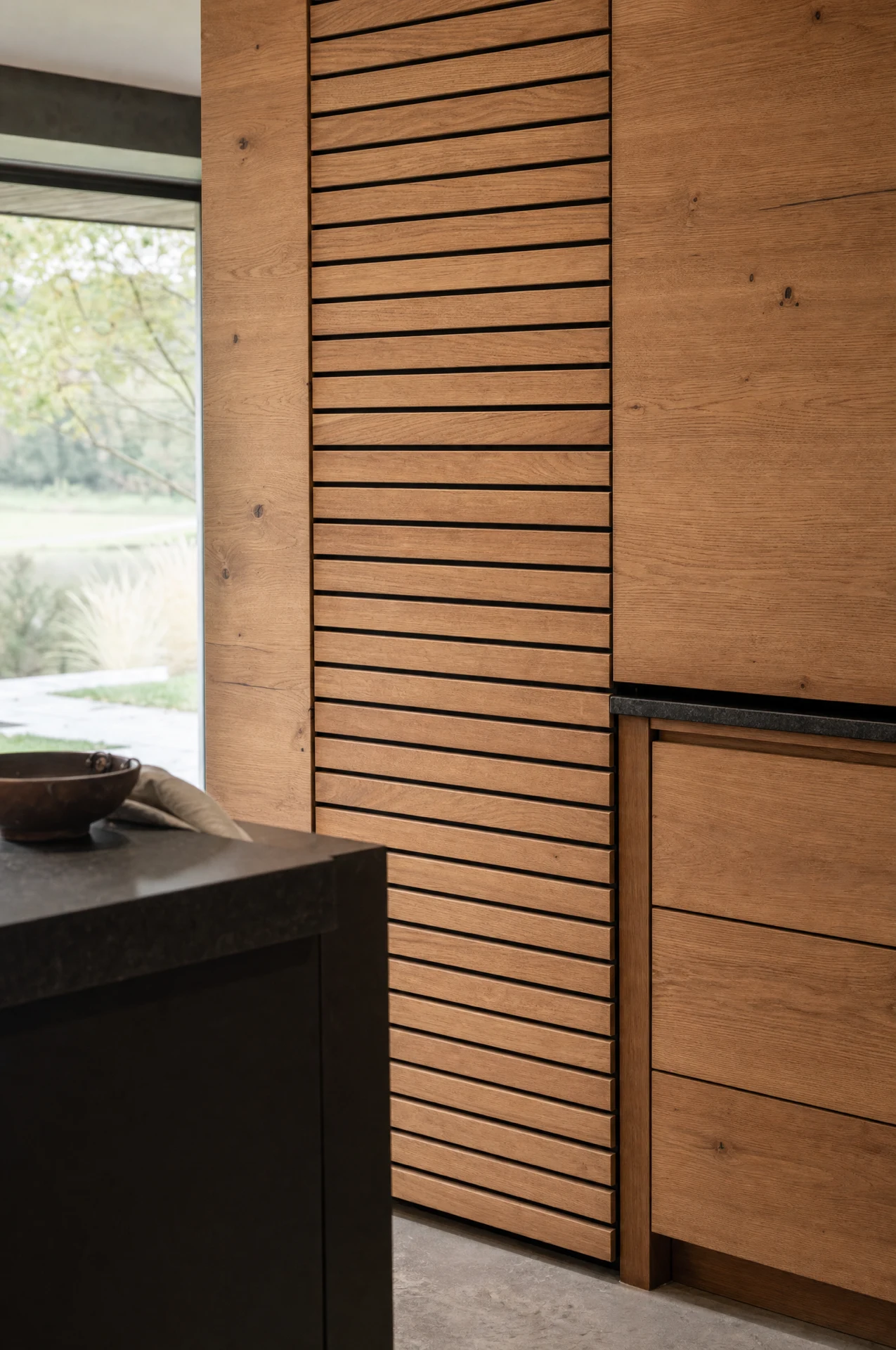
Interiors are usually left unpainted. Ash, sycamore or birch plywood reads clean, shows dirt honestly and takes a wipe. If the pantry door is open across the kitchen, the inside is part of the room and is finished as such.
How they are built
Both rooms are built to the same specification as the kitchen. In-frame construction, dovetailed drawer boxes, solid backs, high-grade birch plywood carcasses. Nothing is downgraded because the door is usually shut.
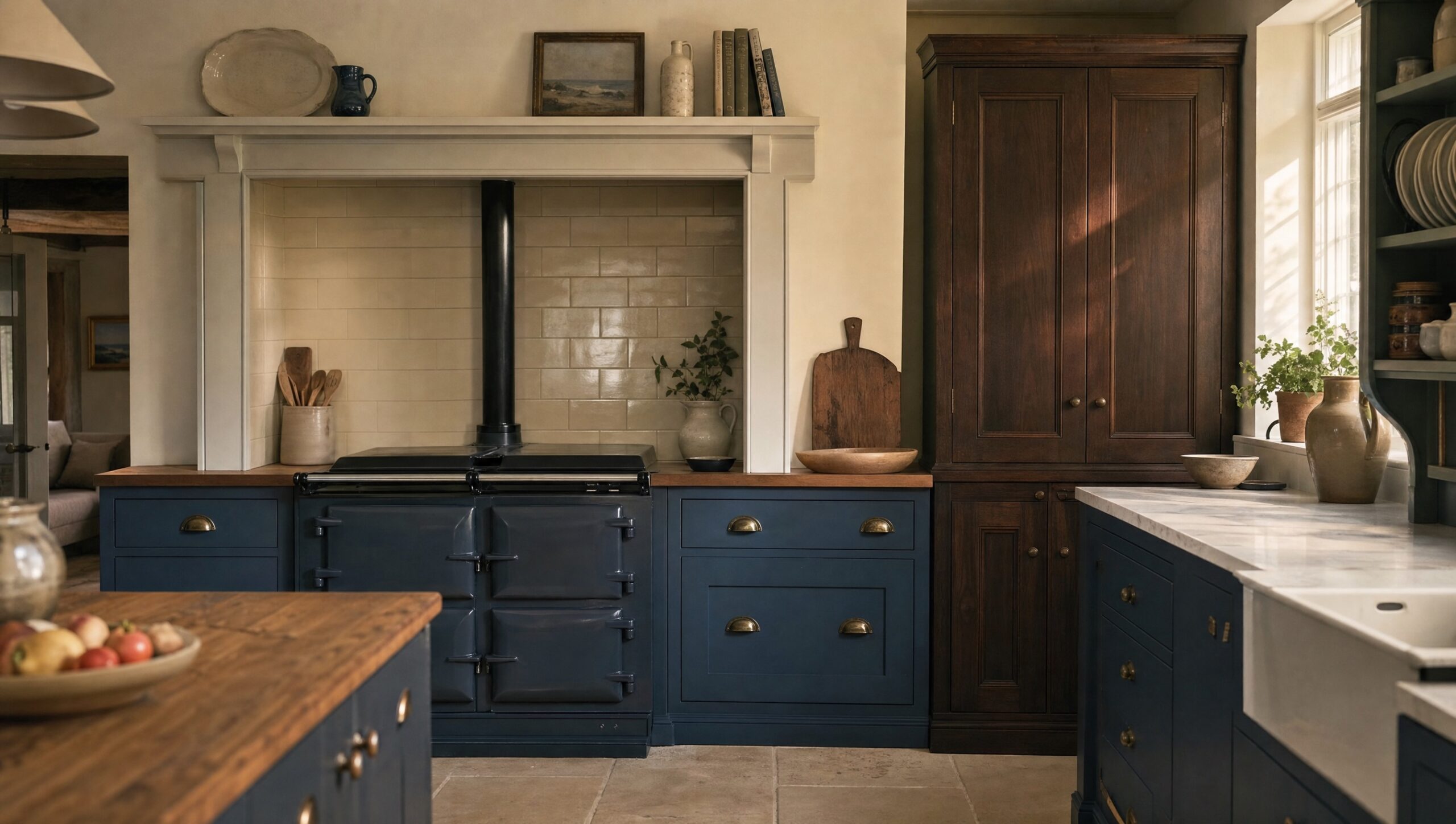
Most sculleries are The Suffolk, painted in the same reference as the kitchen or one shade darker. The Scandi suits a pantry, oiled and left to move. A scullery and a kitchen made at different times by different companies will never quite line up, which is the argument for drawing them together.
Tell us about the room.
Where the house is, roughly when you would like to be cooking in it, and what you have in mind. We will tell you honestly whether we are the right people for it.
Make an inquiry